






Voir toutes les actualités


Polyurethane Doming
From: 4410 €
Doming is produced using a polyurethane resin and hardener that cures in a heating oven.
Appreciated for its exceptional transparency, this solution enhances prints without altering them.
The touch is soft and smooth, giving products a premium look.
This resin is resistant to scratches, humidity, and changing weather conditions, making it an excellent option for objects intended for outdoor or intensive use.
Number of colours:
Une couleur
Multicouleurs
Shape:
Forme relativement plane
Quantity:
Series
Materials:
Discover...
Technical sheet
Polyurethane Doming requires specific equipment:
– A polyurethane resin and its hardener.
– A mixer/degasser that ensures the homogeneous blending of the resin and hardener before their application onto labels or objects.
– A semi-automatic applicator that allows the mixture to be deposited onto the support.
– Flat, stackable storage trays that ensure horizontal positioning to prevent runoff and protect labels from dust during drying.
– A drying oven where the trays are inserted so that the curing process can occur.
– A torch to remove any air bubbles that may form.
Features:
Description
Polyurethane resin and hardener
Hardness
Available in Flexible or Semi-Rigid versions
Packaging
1 kg metal canister
Mixing ratio
1 to 1
Working time / Drying time
After mixing and depending on the working temperature, the application time is approximately 15-20 minutes.
The drying time is 6 hours in an oven at 40°C.
Durability
UV, external aggression, and chemical resistance for 8 years
Accessories available with this product
Examples of applications using this product
Find out what this product can be used for.


FAQ on Polyurethane Doming
What is Doming?
Le Doming (issu du mot anglais dome, ou appelé “bossage” en français) est une technique de marquage qui consiste à déposer une dose précise de résine transparente (généralement du polyuréthane) sur une étiquette adhésive imprimée et découpée.
Par un phénomène physique de tension superficielle, la résine s’écoule, s’arrête pile sur les bords du support et forme un dôme transparent en relief.
Ce procédé transforme un autocollant classique en un emblème haut de gamme grâce à trois atouts majeurs :
- Un effet relief 3D attractif : Le dôme crée un effet loupe tridimensionnel qui magnifie l’impression, ravive les couleurs et donne un aspect brillant très qualitatif qui attire l’œil et invite au toucher.
- Une armure de protection intégrale : Une fois polymérisée, la résine protège durablement le visuel contre toutes les agressions du quotidien : rayures (grâce à sa mémoire de forme), poussière, liquides (eau, hydrocarbures), chocs et rayons UV.
- Une polyvalence absolue à moindre coût : Simple, rapide à mettre en œuvre et non toxique, le doming s’adapte à de nombreuses formes géométriques (carrés, ronds, ovales, découpes vectorielles) et adhère sur une multitude de supports, des vinyles adhésifs aux plaques métalliques.
Why use Doming?
Doming consists of applying a transparent resin over a printed label to create a protective and aesthetic relief effect.
This technique transforms a standard medium into a more premium, durable, and high-quality marking.
Its main advantages:
An eye-catching 3D relief effect
The resin forms a transparent dome that creates a natural magnifying glass effect. Colors appear deeper, contrast is enhanced, and the final result gains in brilliance and perceived quality.
Durable protection for your visual
Once cured, the resin acts as a protective layer against:
- scratches
- water and humidity
- dust
- everyday impacts
- hydrocarbons
- UV rays
A solution adaptable to many substrates
Doming can be applied to adhesive labels, signage plates, and many other printed supports.
It easily adapts to standard or custom shapes: square, round, oval, or specific die-cuts.
Upgrading without complicating production
Simple to implement and fast to produce, Doming allows for adding significant perceived value to the finished product without deeply altering the manufacturing process.
What are the steps involved in Doming?
Le procédé de Doming (ou bossage) suit un flux de production rigoureux en quatre étapes successives. Pour obtenir un dôme parfait, la règle fondamentale est de travailler exclusivement sur des étiquettes détourées et échenillées.
Voici le déroulement chronologique du processus :
L’impression et la découpe
Le graphisme est d’abord reproduit sur un support adhésif ou thermo-adhésif non poreux, puis délimité à la forme souhaitée.
- Impression : Réalisée via des technologies compatibles sans eau (jet d’encre solvant/éco-solvant, laser, sérigraphie ou offset).
- Découpe : Les contours des étiquettes sont mi-coupés (seule la couche adhésive supérieure est tranchée, le liner de protection inférieur reste intact) à l’aide d’un plotter de découpe, d’une table laser ou d’un outil de découpe traditionnel.
L’échenillage
Cette étape manuelle ou semi-automatique consiste à retirer la “chenille”, c’est-à-dire le surplus de matière adhésive inutile entourant les logos.
- Objectif : Ne laisser sur la planche de transport que les étiquettes finales détourées. Isoler les étiquettes est indispensable pour que la résine puisse s’arrêter net sur les bords de chaque pièce lors de l’étape suivante.
La dépose de la résine (Le doming)
La résine (Polyuréthane ou UV) est coulée de manière dosée au centre de chaque étiquette, généralement en un seul passage.
- Le phénomène physique : Grâce à sa fluidité naturelle et au principe de la tension superficielle, la résine s’étale d’elle-même vers la périphérie de l’étiquette. Dès qu’elle atteint le bord franc et net du support découpé, sa progression s’arrête d’elle-même, créant l’effet bombé (le dôme) sans déborder.
Le séchage (La polymérisation)
Une fois la résine stabilisée sur les bords, les planches d’étiquettes doivent figer pour atteindre leur dureté et leur brillance définitives.
- Technologie PU : Les plateaux sont placés dans une étuve (four de séchage) pendant environ 6 heures (ou laissés à température ambiante pendant 24 heures à l’abri de la poussière).
- Technologie UV : Les planches passent dans un four à polymérisation UV pour un séchage ultra-rapide en 10 minutes environ. Les étiquettes sont alors immédiatement prêtes à être conditionnées et livrées.
What are the applications of Doming?
Thanks to its “3D” relief effect, crystalline shine, and high resistance, Doming (or doming/embossing) brings high added value to brand identification.
It is a transversal technology found in almost all economic sectors:
-
Industry and Transport:
-
Automotive and Marine: Manufacturer logos on grilles, body badges, markings on steering wheels or dashboards (maximum resistance to weather and UV rays).
-
Home Appliances and High-Tech: Brand emblems on coffee machines, refrigerators, computers, or industrial tools.
-
-
Communication, Signage and Promotional Items:
-
Point of Sale Advertising (POS): Dressing up counter displays, gondola heads, and interior signs.
-
Goodies and Business Gifts: High-end customization of keychains, USB drives, pens, or magnets.
-
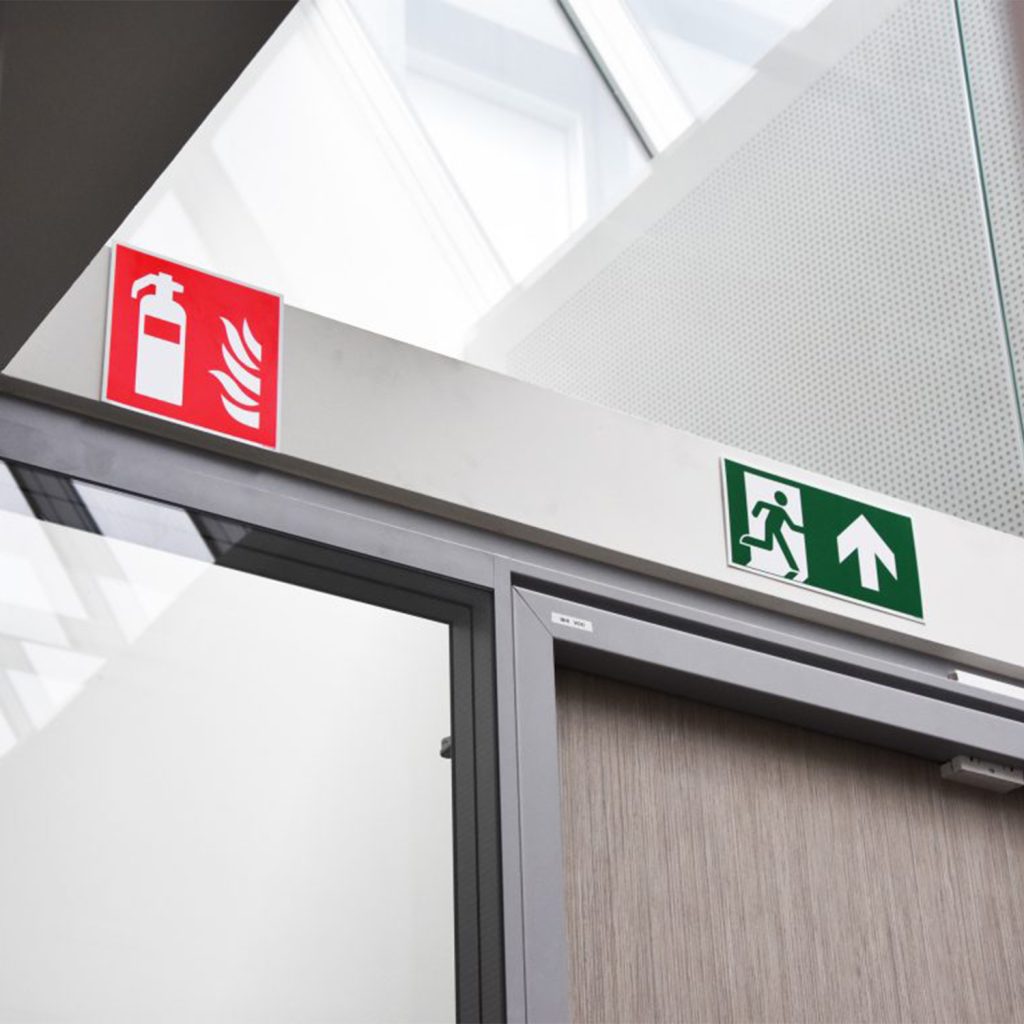
Institutional Signage: Coats of arms and logos for local authorities (town halls, regions), door plates, staff identification badges, and safety instructions.
-
-
Luxury and Cosmetics Sector:
-
Premium packaging: Raised emblems on perfume boxes, spirits packaging, jewelry cases, or luxury watch boxes.
-
Cosmetics: Shade labels or logos integrated directly onto the caps of lipstick tubes and powder compacts.
-
-
Events and Awards:
-
Trophies and Sports: Personalization of medal centers, trophy bases, award plaques, and sports club insignia.
-
-
Fashion and Accessories:
-
Textiles and Ready-to-wear: Use of textile Doming (with a specific flexible resin) to heat-transfer embossed logos onto sportswear, caps, bags, or footwear.
-
-
Skins and Consumer Customization:
-
Protection and Decoration: Embossed stickers (skins) for the aesthetic protection of mobile phones, game consoles, or household items.
-
What working environment does doming require?
Are there different types of resin for doming?
Il existe plusieurs types de résines et de finitions spécifiques pour le Doming, chacune répondant à des contraintes techniques, de durabilité et de budget précises :
-
La résine Polyuréthane (PU)
C’est la référence industrielle pour l’extérieur. Elle offre une résistance totale aux UV, aux intempéries et ne jaunit jamais.
Elle se décline en trois formulations selon la géométrie de vos pièces :-
Souple et fluide : Idéale pour le nappage régulier des grandes surfaces.
-
Souple et visqueuse (moins fluide) : Parfaite pour contrôler la dépose sur de petites étiquettes sans débordement.
-
Rigide : Conçue pour les supports qui ne doivent subir aucune torsion.
-
-
La résine UV
Sa spécificité est sa vitesse. Elle polymérise en seulement 10 minutes sous un four UV. C’est la solution idéale pour les livraisons express et les flux tendus, bien que son coût de revient soit supérieur à la résine PU. -
La résine Époxy
Économique à l’achat, elle présente cependant l’inconvénient majeur de jaunir et de devenir cassante avec le temps. Elle est totalement incompatible avec un usage extérieur. Note : Pour garantir la qualité de vos marquages, cette technologie n’est pas proposée dans notre gamme.
Does Doming require expensive equipment?
L’investissement initial reste particulièrement réduit. Nos solutions ont été spécifiquement développées pour permettre aux professionnels de la signalétique, du lettrage et de l’imprimerie d’intégrer cette prestation à forte valeur ajoutée sans bloquer de budgets importants.
Le coût dépend simplement de la technologie choisie :
- Pour le Doming Polyuréthane (PU) : L’équipement de base requis est très accessible. Il se compose uniquement d’un mélangeur (pour associer la résine et le durcisseur), d’un applicateur pneumatique, et d’une étuve pour le séchage.
- Pour le Doming UV : L’investissement reste également très limité et se compose d’un applicateur et d’un petit four UV compact pour assurer la polymérisation rapide des étiquettes.
En évitant l’achat de lignes de dépose industrielles automatisées, ces configurations légères permettent de rentabiliser le matériel dès les premières séries d’étiquettes produites.
What distinguishes our doming solutions?
Nos solutions se différencient par leur accessibilité et leur flexibilité, offrant une alternative agile aux systèmes industriels lourds. Elles sont spécialement dimensionnées pour les professionnels de la signalétique, de l’étiquette et de l’imprimerie numérique qui souhaitent lancer une activité complémentaire à moindre coût.
Voici ce qui caractérise notre offre :
- Deux technologies au choix, prêtes à l’emploi : Nous proposons des équipements complets et simples d’utilisation, que ce soit pour la technologie Polyuréthane (mélangeurs et applicateurs) ou pour la technologie UV (applicateurs et fours de polymérisation).
- Idéal pour les petites et moyennes séries : Nos matériels sont configurés pour la production de pièces unitaires ou de séries de quelques centaines d’exemplaires. Ils permettent de répondre rapidement aux demandes sur mesure, sans les contraintes de réglage des machines complexes.
- Une approche manuelle et accessible : Contrairement aux intégrateurs industriels, nous ne proposons pas de robots de dépose automatisés. Notre objectif est de vous permettre de tester le marché et de générer une forte valeur ajoutée, simplement, rapidement et sans investissement massif.
What is the durability of polyurethane resin Doming?
Thanks to the intrinsic physicochemical properties of polyurethane, Doming offers an exceptional protective shield for your markings. Its lifespan under extreme outdoor conditions can reach approximately 8 years without visual or structural degradation.
This durability is explained by four levels of active protection:
- UV Protection (Anti-yellowing)
The molecular structure of the PU resin filters ultraviolet rays. The dome maintains its crystal transparency and acts as a screen to prevent the discoloration and tarnishing of printing inks over the years. -
Scratch Protection (Shape memory)
Unlike rigid epoxy resins that get permanently scratched, polyurethane resin possesses resilient flexibility. In the event of an impact or scratch, its suppleness allows it to naturally return to its original domed shape. -
Protection against climatic aggressions
The dome is completely waterproof and insensitive to extreme thermal variations. It perfectly withstands cycles of frost, snow, driving rain, and intense heat without cracking or peeling. -
Protection against chemical aggressions
The resin layer offers an excellent inert and waterproof barrier against common chemical agents such as solvents, industrial cleaning products, fuel, and hydrocarbons.
What amount of polyurethane resin is needed for 1 m²?
The amount of polyurethane resin required depends on the surface area to be covered and the desired thickness of the dome.
- For a standard thickness of approximately 1.8 mm, the average consumption is as follows:
You should allow for approximately 1.7 kg to 2 kg of mixture per m². - How to perform the calculation?
The calculation can also be based on a reference technical ratio: - Material yield
1 gram of mixture allows you to cover approximately 5 to 6 cm² of surface area.
Practical application
Depending on your production, simply convert the total surface area to be covered into cm² or m² to accurately estimate the amount of resin required.
This allows you to anticipate your material needs and optimize your orders for each project.
What is PU resin for Doming?
Polyurethane (PU) resin for Doming is a two-component material used to create a transparent raised effect on printed labels.
It is applied in a thin layer onto an adhesive backing, where it spreads naturally to form a homogeneous dome thanks to its surface tension.
Its fundamental characteristics are:
- A two-component system: The product is inseparable from its hardener. It is the chemical reaction between these two elements (polymerization) that allows the resin to set and harden.
- Equal parts dosing (1:1 Ratio): Preparation is extremely simple. For the resin to catalyze perfectly and retain its mechanical properties, the mixture must be dosed in strictly identical volumes or weights: 1 part resin to 1 part hardener.
- Permanent flexibility: Unlike conventional epoxy resins that become brittle and yellow, polyurethane resin retains its crystal-clear transparency and a unique rubbery flexibility, which is essential for resisting impacts and UV rays outdoors.
What type of printing should be used with Doming resin?
To ensure perfect adhesion and prevent any chemical reaction with the polyurethane (PU) resin, you must use printing technologies that utilize non-aqueous inks.
The fully compatible printing processes are:
Modern digital technologies:
- Non-aqueous inkjet printing.
- Eco-solvent or solvent-based inkjet printing (print-and-cut systems).
- Thermal laser and color printing (dry toner).
Traditional printing processes:
- Screen printing.
- Lithography.
Golden rule: Regardless of the chosen process, inks must be perfectly dry and thoroughly degassed before pouring the resin to avoid the appearance of air bubbles or polymerization defects.
On which type of materials should Doming resin be applied?
On which shapes and sizes can the doming resin be applied?
Thanks to its fluidity and surface tension properties, polyurethane (PU) resin adapts to virtually all label sizes and geometries. However, the shape of the substrate plays a major role in the consistency of the resulting dome.
Ideal shapes (To be preferred)
Fluid contours allow the material to slide perfectly symmetrically. The shapes best suited for the process are:
- Circles and ovals.
- Squares and rectangles with rounded corners.
Complex shapes (Precautions to take)
- Avoid right or sharp angles: The resin advances more slowly towards pointed tips. It may struggle to reach the extremities or spread unevenly, which increases the risk of thickness defects or overflow.
Application rules for an optimal result
To succeed with your application, regardless of your label size, the process relies on three key factors:
- Choosing the resin: Select the formulation adapted to the final constraints of your medium, namely a flexible resin (ideal for curved surfaces) or a rigid resin.
- Le dosage précis : Déposez la quantité exacte de matière correspondant à la surface de l’étiquette pour éviter le manque de relief ou, à l’inverse, l’excès qui provoquerait une rupture de la tension superficielle.
- Une dépose en un seul passage : Dans la grande majorité des cas, l’application s’effectue en une seule fois. Une fois coulée au centre, la résine PU s’étale d’elle-même par capillarité jusqu’aux contours de l’étiquette, où elle se stabilise naturellement pour former un dôme parfait.
.
What is the lifespan of PU and UV Doming resins?
The shelf life of Doming resins depends primarily on their chemical nature and storage conditions.
Under proper conditions, PU and UV resins offer stability suitable for professional use, but their performance over time differs.
Polyurethane (PU) resin
PU resin is the more stable of the two technologies when stored correctly.
Before opening
The shelf life of an unopened container is generally guaranteed for up to 18 months from the date of manufacture.
Best storage practices
- avoid humidity and temperature variations
- store at a stable ambient temperature
After opening
Once opened, the PU resin can be resealed and reused for a period of approximately 6 months after initial use.
It maintains good stability as it does not react to light.
It can therefore remain usable for several weeks, depending on the storage and sealing conditions of the container.
UV resin
UV resin is more sensitive due to its reactivity to light.
Before opening
It can be stored for an average of 6 to 9 months, provided it is protected from any exposure to UV rays and direct light.
Best storage practices
- store away from all light
- stable and moderate temperature
After opening and mixing the components
Once the UV resin is mixed, it must be used quickly.
Under optimal storage conditions:
- refrigerated storage
- complete protection from light
- perfectly sealed container
The shelf life after opening is approximately 1 week maximum.
In summary
- UV resin should be considered a product for quick use after opening, ideally consumed within a week.
- PU resin offers greater flexibility in terms of shelf life after opening.
How to calculate the quantity of resin for Doming?
To accurately estimate the volume of polyurethane resin to prepare, the calculation is based on a standard consumption ratio proven in the workshop.
The basic rule
Average consumption is approximately 1 g of resin to cover a surface area of 6 cm² (with a standard dome thickness of approximately 1.5 to 2 mm).
The 3-step calculation method
To determine the total quantity of resin required for your production, follow these simple steps:
- Calculate the surface area of one label (in cm²): Multiply the width by the length (for a square or rectangular shape).
- Calculate the total production surface area: Multiply the surface area of one label by the total number of labels to be produced on your sheet.
- Apply the formula: Divide this total surface area by 6 to obtain the weight of the resin in grams.
What is the height of a PU resin dome?
Depending on the shape, size, and surface finish of the sticker, it is possible to create a very high (3 mm) or very low (1.5 mm) 3D resin dome.
Why does Doming resin not flow off the label?
Doming resin does not overflow from the substrate thanks to a precise balance between its physical properties and the characteristics of the adhesive label.
This behavior is based on several complementary phenomena:
- a high surface tension.
- a controlled viscosity.
- adhesion adapted to the substrate.
- a stabilization effect at the edges of the label.
What is the curing time for the PU Doming resin?
The full curing time for the material is 6 hours in an oven at 40° C (24 hours before shipping).
What are the environmental properties and durability of PU resins for Doming?
Polyurethane (PU) resin for Doming is specifically formulated to withstand the harshest outdoor conditions.
It has undergone rigorous laboratory aging tests to ensure its stability and durability over time.
Its technical performance is characterized by:
- Exceptional UV resistance (anti-yellowing guarantee): Ultraviolet exposure tests demonstrate that the resin maintains its crystal clarity and original shine for 8 years, without suffering from any yellowing or tarnishing.
- Excellent resistance to climatic conditions: Its flexible and robust molecular structure allows it to withstand temperature variations (freezing and extreme heat), bad weather, ambient humidity, and atmospheric pollution without alteration.
- Durable mechanical stability: Designed for outdoor use, it retains its domed effect, flexibility, and adhesive properties to the substrate throughout its lifespan, effectively protecting the underlying print.
What precautions should be taken when preparing the substrate for Doming?
Doming requires great precision from the very first stages of manufacturing. To ensure the resin settles perfectly through capillary action without ever overflowing, here are the essential rules to follow:
Preparing the graphic file
The geometry of the labels plays a decisive role in the proper distribution of the resin:
- Minimum spacing: Always allow for a space of at least 1 mm between each label on your sheet.
- Sheet format: Prefer working with smaller formats, ideally A4 size, which are easier to handle and keep perfectly flat.
- Forme des contours : Donnez la préférence à des formes aux angles arrondis. Évitez au maximum les découpes complexes comportant des angles trop vifs ou aigus, car la résine y circule moins bien.
La découpe (L’étape la plus critique)
Le réglage du plotter de découpe conditionne la réussite du Doming :
- Contrôle de la force de coupe : Ajustez précisément la pression de la lame pour couper uniquement le vinyle autocollant, sans jamais entamer ni rayer le papier support (liner).
- Importance de l’arrêt capillaire : C’est le rebord net du vinyle non entaillé qui permet à la résine liquide de se propager naturellement jusqu’au contour et de s’y arrêter par tension superficielle. Si le papier support est marqué ou coupé, la résine s’y infiltrera et débordera immédiatement à l’extérieur de l’étiquette.
L’impression et les finitions
Un support parfaitement stable et plat est indispensable avant la dépose de la résine :
- Séchage complet : Attendez que les encres d’impression soient totalement sèches à cœur avant toute manipulation.
- Meticulous weeding: Carefully remove the excess material around the labels, ensuring not to lift or peel the edges of the desired labels.
- Final flattening: Use an application roller over the entire sheet to perfectly flatten the labels and ensure complete adhesion of the edges to the substrate before pouring the resin.
UV resin or polyurethane PU resin: which one to choose?
The choice between UV resin and polyurethane (PU) resin mainly depends on your productivity requirements and usage constraints.
Each technology offers specific advantages depending on the type of production and the final environment.
UV Resin: Ultra-fast productivity
UV resin is distinguished by its extremely fast polymerization speed thanks to ultraviolet radiation.
- Near-instant drying
Passing under a UV lamp immediately triggers the chemical reaction. The parts are dry, ready for handling, and ready to be shipped in approximately 10 minutes. - Great flexibility of use
The resin can be prepared in advance and stored in a cool place. It only hardens upon exposure to UV light, which allows for working without material waste and at your own pace.
Polyurethane (PU) resin: Mechanical robustness
PU resin is slower to polymerize, but it remains a benchmark for demanding and durable applications.
- Longer drying time
Polymerization requires about 6 hours in an oven, and up to 24 hours at room temperature. - Excellent long-term resistance
Polyurethane resin offers great flexibility, good stability, and high UV resistance, limiting yellowing. It is particularly suitable for outdoor use and automotive applications
.
THERMOFLAN advantages
Over 60 years of experience
Permanent stock
Best quality/price ratio
Technical availability
Demandez conseil à nos experts
Comment pouvons-nous vous aider ?